The Glaze Files
Introducing – The Glaze Files — targeted glaze help, one topic at a time.
You don’t always need a full glaze chemistry course. Sometimes you just need to dig into one topic.
So we’re introducing The Glaze Files — 16 standalone lessons drawn from Making Glazes, Make Sense, our most popular course. Each one focuses on a single glaze subject and is available individually as a lifetime purchase you own forever.
All of The Glaze Files Include:
Lifetime self guided access
On demand video lectures – watch as many times as you like
Access to the CMW Thinkific App for on the go learning!
Option to upgrade to Making Glazes, Make Sense using credit for each Glaze File purchased
Cost: $40 – $60 depending on topic
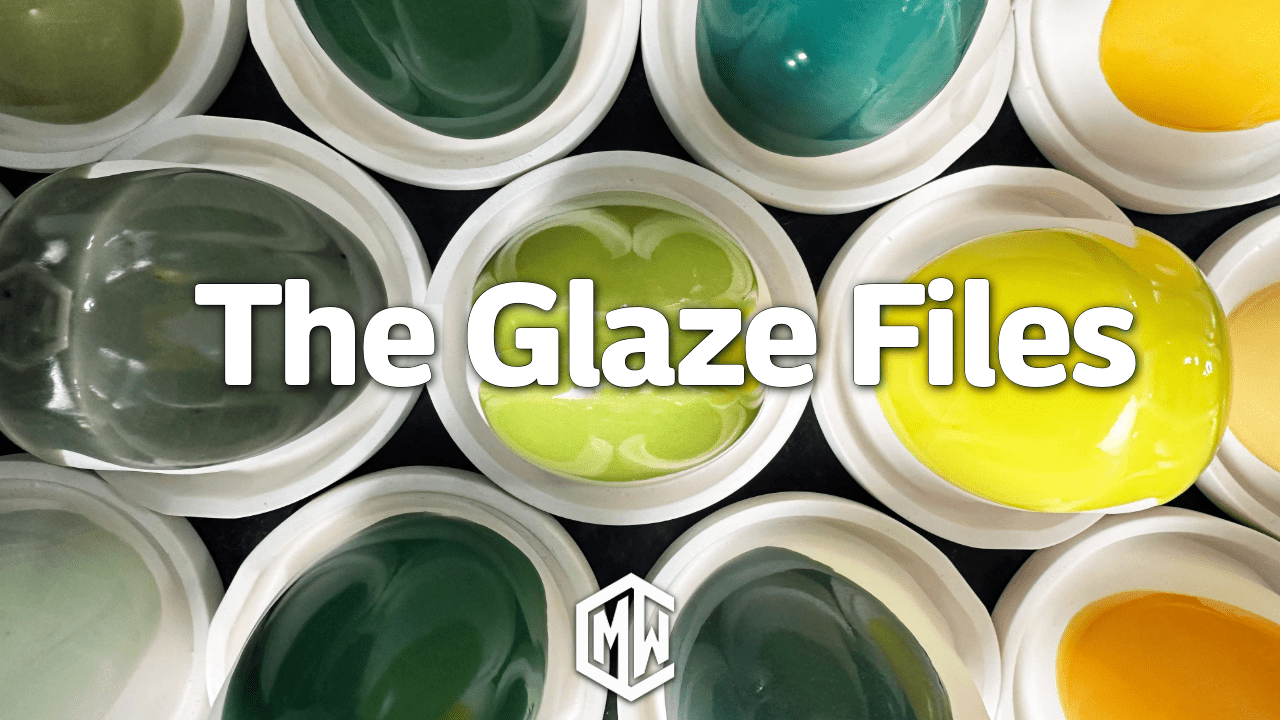
The Glaze Files
- Glaze File #1 Introduction to Glazes – Glazes are just glass. This introduction breaks down what glazes really are, the four chemical building blocks behind nearly every glaze, and why temperature and melting matter most — the foundation for everything in Making Glazes Make Sense.
- Glaze File #2 Geology – Glazes start as rocks. This module traces ceramic materials from the Earth’s core to your glaze shelf — how minerals form, why silica rules, how feldspar becomes kaolin, and why the same rocks appear worldwide. The geology behind every glaze.
- Glaze File #3 Chemistry – Chemistry is what glazes are. This module tames the periodic table to the 11 elements that matter, builds from atoms and bonding to oxides and molecules, and introduces moles and molecular weight — why you can’t swap materials by weight.
- Glaze File #4 Glass Formers – Get hands-on with the powders: silica, alumina, and kaolin. Why we choose cheap, universal, non-soluble materials, why each ingredient serves one purpose, and how kaolin supplies alumina while keeping your glaze suspended in water.
- Glaze File #5 Alkali Metals – Fluxes bring glass formers down to kiln range; every glaze needs two. This covers the first: alkali metals. How fluxing works, why lithium/sodium/potassium are interchangeable, why feldspars are the default, and why soluble carbonates cause trouble.
- Glaze File #6 Alkaline Earths – The second flux type, and arguably the more important: 70% of a glaze’s flux, driving color, texture, and durability. Profiles calcium, magnesium, strontium, barium, and zinc, busts the Whiting-pinhole myth, and gives barium’s toxicity honest context
- Glaze File #7 Seger and Stull – The theoretical heart of the course: why glazes melt only in the last 100°C, why we fire to a chemical reaction not a temperature, and how Seger’s Unity Molecular Formula and Stull’s map predict whether any glaze will be glossy, matte, or underfired.
- Glaze File #8 Calculations – Theory becomes practice: calculate the Unity Molecular Formula by hand and with software, then use it to manipulate real recipes — substituting materials, changing temperature, and moving glazes around Stull’s map. Plus why “glaze limits” are garbage
- Glaze File #9 Durability – Why “food-safe” and “durable” aren’t the same thing. Durability comes down to the flux ratio: 0.3:0.7 wins at every temperature, acids and dishwasher soaps attack glass differently, and boron can never rescue a bad flux ratio. Full stop.
- Glaze File #10 Boron – How to fire below cone 10. Boron is the key — not a flux but a low-melting glass former — and the Katz boron map tells you how much you need at any cone. Plus frits, the lost Gerstley borate, and Bristol zinc-calcium reactions.
- Glaze File #11 Special Effects – What makes a glaze crystallize, separate, spot, or run like lava? This 13-lesson module unpacks the chemistry behind every major effect glaze—crystalline, oil spot, shino, wood ash, and more—so you can create them on purpose, not by accident.
- Glaze File #12 Flaws – Why does your glaze craze, crawl, shiver, or pinhole? This 9-lesson module explains the chemistry behind every common glaze flaw, how to tell them apart, and how to actually solve them—not just the diagnoses that never work.
- Glaze File #13 Color – Explore ceramic glaze stains as stable oxide colorants for predictable color. Learn how bases, cone range, oxide blends, flux and reduction effects, bubbling issues, and cadmium encapsulated stains shape glaze results.
- Glaze File #14 Application – Learn how clay bodies influence glaze results through absorption, not chemical contamination. Explore glaze thickness, bisque temperature, water content, and testing methods to control application and improve consistency.
- Glaze File #15 Firing – Explore ceramic firing with a focus on consistency over myth. Learn how firing rates, cone temperatures, heat work, dwells, refiring, dark clay bodies, iron decomposition, and quartz inversion shape kiln results.
- Glaze File #16 Safety – Explore ceramic material safety through vanadium, talc, uranium, selenium, barium, and manganese. Learn to separate real toxicity risks from studio myths using chemistry, firing context, and sensible glaze practices.