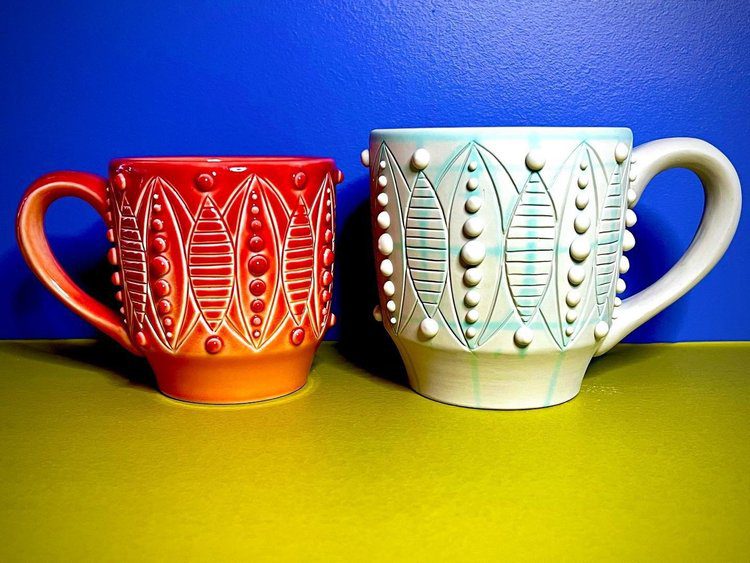
Episode 46 – Why does clay shrink when fired?

We all know that disappointing feeling. You open a kiln and see a beautiful piece that looks exactly like yours, except that its oddly smaller than you remember. On this week’s show the gang talk about the chemical process that causes clay shrinkage, as well as, the pros and cons of using manganese for speckled clay. Listen to episode 46 now on your favorite podcast app or stream here.


If you have a ceramic chemistry problem you’d like help with, send us a voice memo with your question to forfluxsakepodcast@gmail.com.

Share this Episode

Explore our courses!

Not sure where to start? Get help finding your learning path.

Start Learning

Recent Podcast Episodes

Have you wondered what makes a glaze food safe? Today we are happy to welcome Gabriel Kline and Bill Collins to the show to talk about the topic, and their new book Amazing Glaze: Food Safe Recipes. They discuss the definition of food safety, how to test glazes, and what they learned after testing dozens of popular cone 6 and cone 10 recipes.
Do you fire your kiln fast or slow? And does it really matter? Today the gang answer a few listener questions about the relationship between temperature, glaze melt, and vitrification. They also discuss a class of clays out of the UK that vitrify at low fire temperatures.
Commercial casting slips are great for their convenience, but what do you do when your recipe hard-pans in the bucket? Today the gang talk about why hard-panning happens and how you can fix it. They also discuss making temp checks, the best bisque temp for commercial glazes, and the controversy around the sale of fake ceramic pigments.