You love your clay body. It’s the smooth, reliable workhorse you turn to for mugs, bowls, and dinner plates…
But what if the data on the bag, the manufacturer’s promise, isn’t telling you the full story?
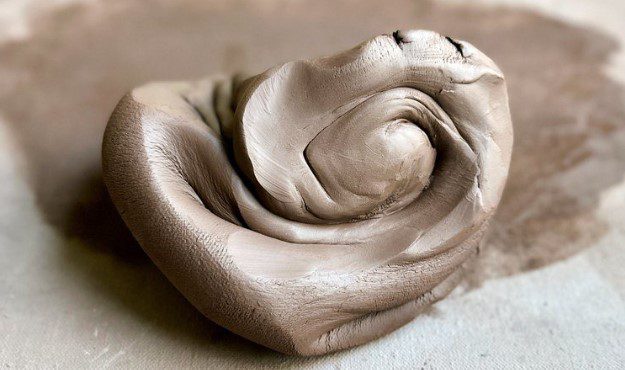
At Ceramic Materials Workshop (CMW), we believe in knowing your materials inside and out. That’s why we perform Clay Body Profiling, a scientific deep-dive into how your clay truly behaves from the moment you wedge it to the final cooling phase in the kiln. It’s about pulling back the curtain on the vitrification process, absorption, density, shrinkage, and thermal expansion to help you optimize your practice.
To truly understand what this means for the everyday potter, we took a hard look at one popular clay body: Little Loafers from Highwater Clays.
The Little Loafers Promise vs. The CMW Reality
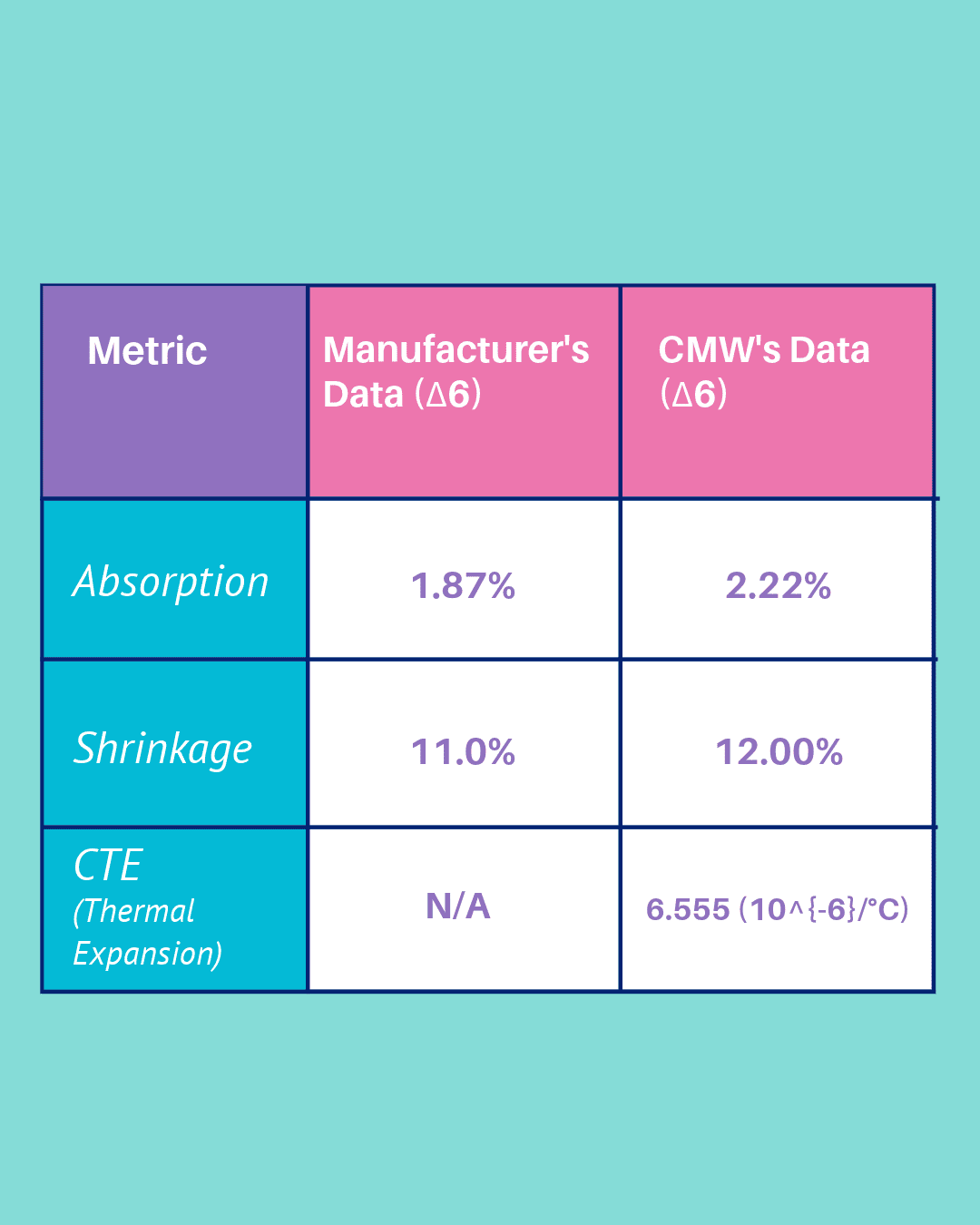
Highwater Clays markets Little Loafers as one of “Earth’s Best Clays,” promising a versatile △5 – △6 body. Their published data suggests acceptable performance for functional ware:
The initial numbers aren’t wildly off, but they hide a critical truth: A single data point is not the full picture.
The Danger of a Single Number
If your manufacturer says their △6 clay has an absorption of 1.8%, that tells you it’s “stoneware-ish.” But here’s what CMW’s full-curve profiling revealed:
Wait, wait..I’m more curious in glaze testing! Read CMW’s Blog: Don’t Skip the Swatch! Why Glaze Testing is Your Ceramic Superpower
The Problem of Porosity
For potters making durable, functional ware—the mugs you drink coffee from every day—CMW adheres to a strict standard: the body should be below ~0.5% absorption at peak temperature to be considered properly vitrified and food-safe.
The Verdict: Little Loafers never gets anywhere near that mark in its recommended firing range. It remains permanently in the “open / absorbent” zone.
This open body drastically increases the risk of:
- Water ingress and slow leakage.
- Staining and bacterial harboring in microporosity.
You Need to See the Curve, Not Just a Point
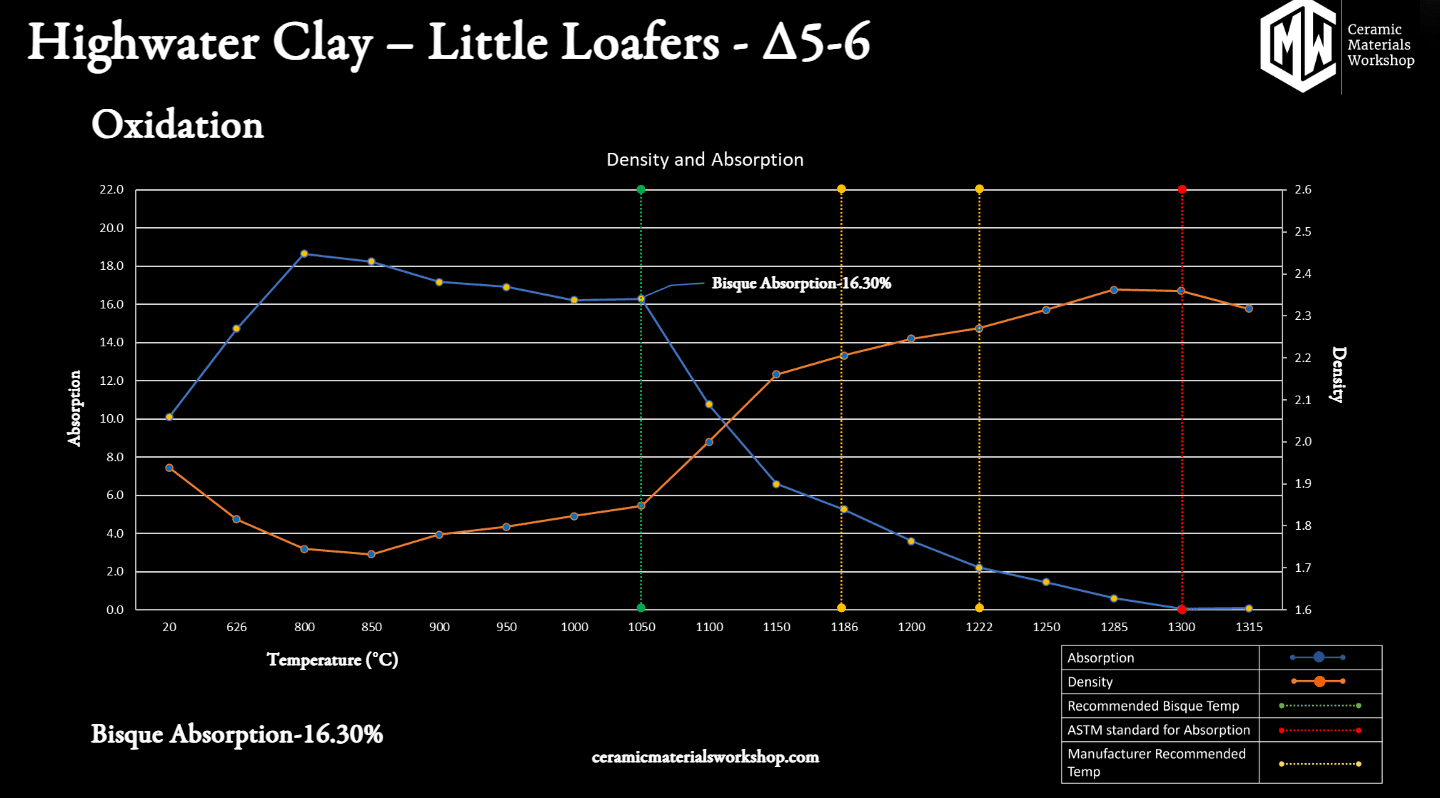
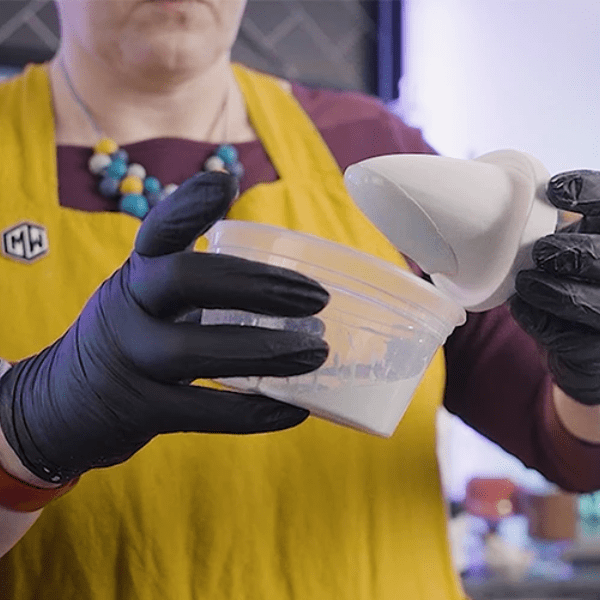
Our profiling process involves firing samples—small cylinders or ‘pucks’—in a series of increasing temperatures, a process called a firing curve. We measure mass, dimensions, absorption (cold and boiled), and density across this curve.
A full profile shows exactly where vitrification starts and ends, when the clay fully tightens up, and—critically—when it begins to bloat or weaken. For Little Loafers, this testing reveals that even before the recommended maximum temperature, the body is already too porous for high-durability functional work.
Is Little Loafers Right For You? The Functional Verdict
While Little Loafers behaves roughly as advertised regarding basic shrinkage and absorption values, it fails to meet the standard of a truly vitrified body required for demanding functional use.
| ✅ Reasonable Uses |
|
|
|
| ❌ Not Recommended For |
|
|
|
Your Single Biggest Takeaway
Why is this profiling so vital? Because your kiln, your firing schedule, and your own standards for safety and durability are likely different from the manufacturer’s lab.
The most important advice we can give to a potter considering Highwater’s Little Loafers is this:
Treat Little Loafers as a nice, but not fully vitrified mid-range white body at △5 – △6, and make your own absorption and glaze-fit tests before committing it to functional ware.
A full clay body profile tells the whole story of what’s happening in the kiln. It’s the only way to truly know if your △6 clay is actually a durable △10 body, or, in this case, a body that is better reserved for art than your morning coffee.
Interested in more? Watch CMW’s LIVESTREAM
Matt Katz has not only conducted an in-depth analysis of our commercial clay body profiling data but has gone LIVE on YouTube to discuss his findings and provided comprehensive answers to CMWs audiences clay body questions and even offered practical guidance for troubleshooting common clay flaws.
Watch the live NOW and don’t forget to subscribe so you won’t miss the next one!
Ready to dive deeper?
Loved learning about ceramic glazes? Want to go even deeper? Check out our Workshops & Courses, now available in Spanish, or YouTube Channel where Matt breaks it all down, myth-busting and Stull chart included!