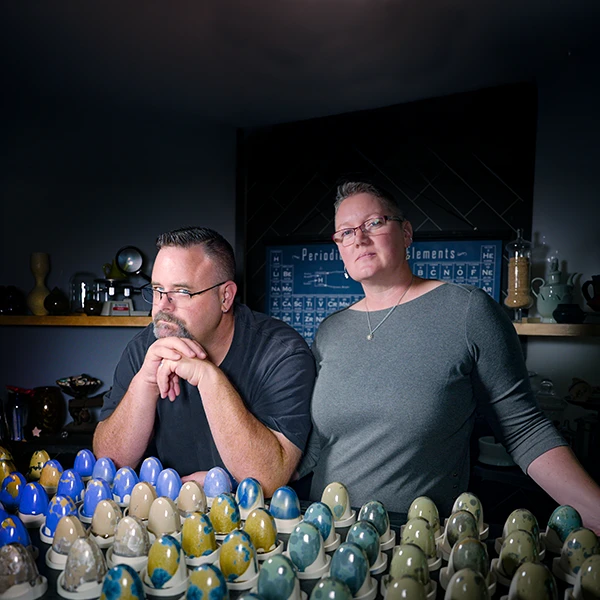
Unloading a kiln can be an emotional rollercoaster, especially if its filled with a new form that gives you trouble. Today the gang answer a listener question about how to keep plates from cracking, the best temperature for firing terracotta, and if there is a vegan alternative for shellac.
Do you have questions or need advice on glazes?
➤ Check out For Flux Sake Patreon. This is a great way to show your support and have access to discounted merch, live hangouts, and extra episodes. Head over to Patreon (https://www.patreon.com/c/ForFluxSakePodcast/) and sign up today.
Are you coming to NCECA? Look for Matt and Rose at the Ceramic Materials Workshop booth and Kathy at the Harvard Ceramic booth in the expo hall. Hope to see you there.
Today’s episode is brought to you by:
Monkey Stuff (https://monkeystuff.com/)
The Rosenfield Collection (https://www.rosenfieldcollection.com/)
Cornell Studio Supply (https://cornellstudiosupply.com/)
Ceramic Materials Workshop (Making Glaze Make Sense)
Glazing problems? Kiln meltdown?
Send your questions to forfluxsakepodcast@gmail.com – you might hear the answer on the show!
Want to learn more?
Check our our blog articles and all of our videos on our YouTube channel!