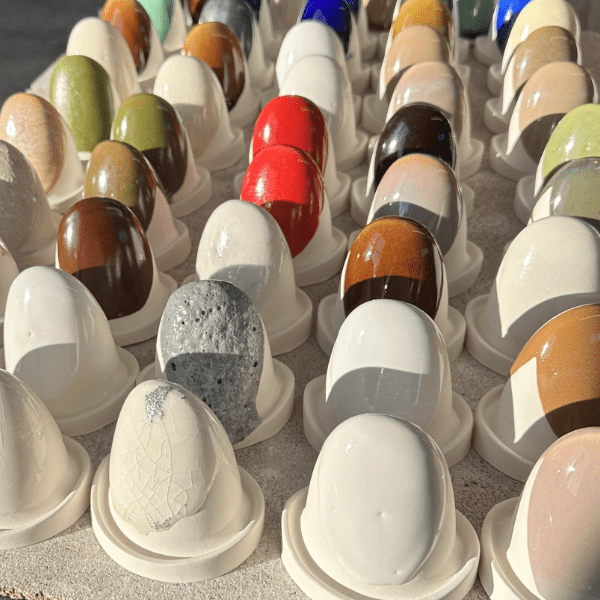
Glossy glazes are lovely… but what if your mug could shimmer like a geode, look scorched by a volcano, or bloom with star-shaped crystals?
Welcome to special-effects glazes—the drama kids of the kiln.
They run, pop, crackle, and sparkle on purpose, and they’re a ridiculously fun way to make your work stand out.
Below are four effect “genres” you can try, even as a newcomer, plus simple tips to keep the chaos charming instead of catastrophic. (Want the full how-to with recipes and firing plans? That’s what our online classes are for – more on that at the end.)
Curious about Glaze Chemistry Courses? Try out Ceramic Materials Workshop FOR FREE by watching our free chemistry lessons on YouTube!
Crystalline Glazes: Growing Jewels on Your Pots
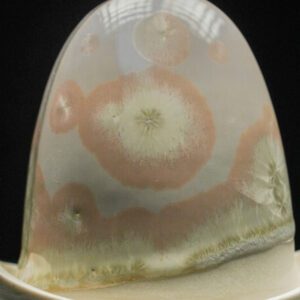 Crystalline glazes literally grow crystals in the glass as the kiln cools. You take a fully melted glaze to peak, then drop to a “sweet spot” and hold—this is when crystals bloom. Hold longer = bigger crystals; shorter = smaller. Yes, they can be runny, but that’s why we use catchers. The result looks like gemstones bloomed right on the surface.
Are matte glazes all about slow cooling? What’s really happening in crystalline glazes? Join Matt for another episode of Cracking the Kiln where he breaks down the different chemistry behind matte and crystalline glazes, covering:
- ✔️ What actually creates matte surfaces (spoiler: it’s not just the cooling!)
- ✔️ How zinc and calcium crystals form in the kiln
- ✔️ Why “micro-crystals” might not be what you think
- ✔️ Firing cycle for consistent results
Crackle (aka “I meant to do that”)
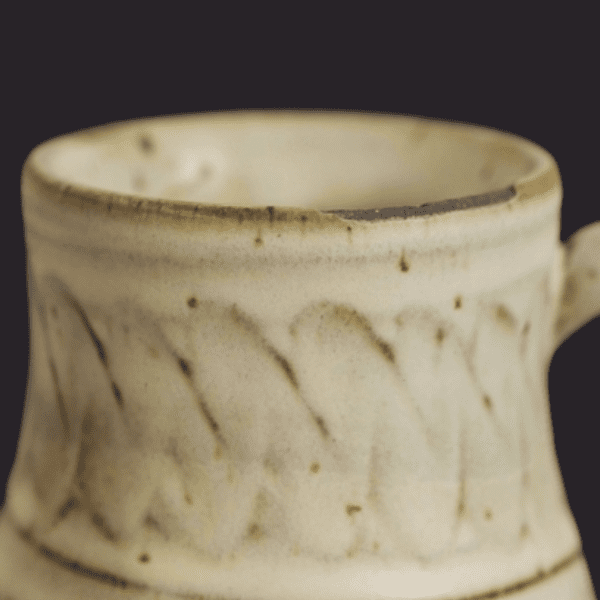
Crackle is just crazing you actually like. Fine lines appear as the glaze cools; potters often wipe ink or tea into the cracks to make the webbing pop. It reads vintage, graphic, and a little bit magical—great for exteriors and artware.

Lava / Crater Glazes: Textured, Bubbly, Bold
 Lava glazes trap bubbles on purpose for a rugged, moonscape texture.
Chemically, the classic version uses a pinch of silicon carbide (SiC): in the molten glaze, SiC reacts—silicon becomes extra silica for the glass, and the carbon turns into CO/CO₂ gas. Those gases inflate bubbles inside a relatively stiff melt; the bubbles can’t fully heal before cooling, so they “freeze” into craters.
Translation: glorious, tactile texture with real depth.
Crawling: Perfectly Imperfect
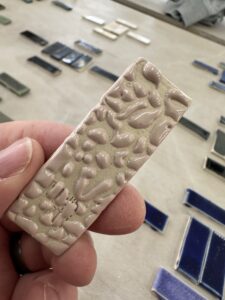
Crawling happens when the glaze intentionally shrinks away in patches during the melt, exposing islands of clay beneath. Used deliberately, it creates bold, graphic surfaces with tons of attitude.
Want to stop crawling?? Listen to For Flux Sake, Episode 29: Happy Halloween, How do I stop this creepy crawling glaze?
Oil Spots: Little Constellations in a Glossy Night
Oil-spot glazes create tiny halos and dots across a glossy surface. The classic look comes from iron-rich bases in oxidation: bubbles form, pop, and heal, leaving those luminous rings. Thin, even application helps you dial in the sparkle without going blobby.
Quick Success Rules (so you actually enjoy this)
- Test tiles are your besties. One shape, many variables—change one thing at a time (thickness, peak, hold).
- Mind the run. Some effects move. Use catchers and protect shelves.
- Thickness acts like temperature. A heavier coat behaves “hotter.” Try a tiny thickness tweak before rewriting the recipe.
- Take notes, take photos. You’ll learn faster than you think.
Get Inspired!
Peek at artists pushing the look like @sarahnikceramics then come back and make your own version. Start small, iterate, and you’ll be shocked how fast you go from “glossy again?” to “whoa, how did you do that?!”

@sarahnikceramics on Instagram
Want the deep dive without the overwhelm?
We teach the chemistry, planning, and firing strategies that make these effects predictable—and repeatable. When you’re ready to go from happy accidents to confident results, join our online classes.
You bring the curiosity; we’ll bring the roadmap.
Try out a FREE online glaze chemistry lesson NOW:
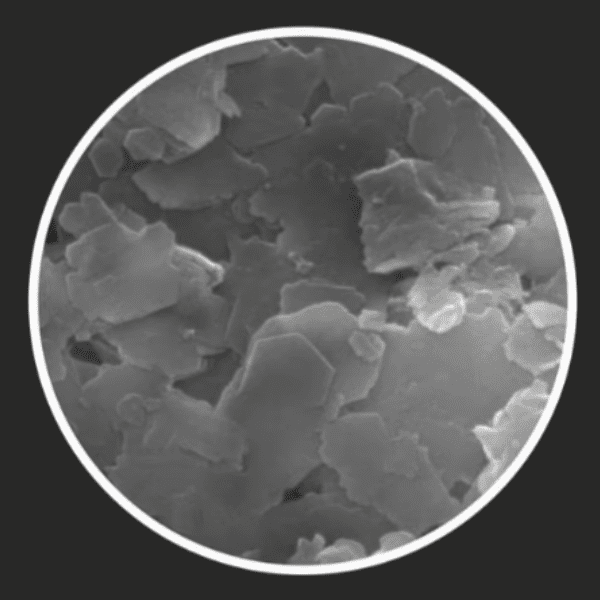
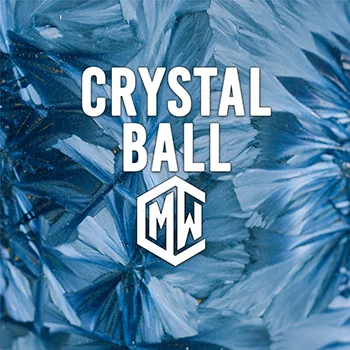
In this sample lesson of our Crystal Ball course, Matt discusses the fact that clay can exist in crystalline glazes. Crystalline glazes are wonderous to observe but challenging to make, but they aren’t magic, they are chemistry.
In this course, we will dive into exploring how and why crystalline glazes actually work, testing new and interesting glazes, and look into what we still can discover about these amazing glazes.
Ready to dive deeper?
Loved learning about ceramic glazes? Want to go even deeper? Check out our Workshops & Courses, now available in Spanish, or YouTube Channel where Matt breaks it all down, myth-busting and Stull chart included!