Your Guide to Ceramic Decoration
Ever wonder how ceramic artists create those incredibly detailed, vibrant designs that look like they’re painted right onto the clay? It’s all thanks to a creative secret weapon called underglaze! If you’ve ever felt intimidated by pottery glazing, underglaze is here to be your new best friend. It’s like painting with clay, and it opens up a whole new world of artistic possibilities.
So, what exactly is underglaze?

(Image owned by Ceramic Arts Network)
What is Underglaze?
In ceramics, underglaze refers to the specific recipe of slip that can be painted directly onto pottery before it is covered with a clear glaze and fired.
(Image is owned by oxox pottery)

Unlike a typical glaze, which is designed to melt and form a glassy, non-porous surface, underglaze is formulated to adhere to the clay body without melting or running significantly during firing.
This allows for detailed designs and illustrations to remain sharp and vibrant. It is one of the most painterly ways of decorating ceramics. Only bested by china painting. The subsequent clear glaze seals the surface and provides a durable, glossy finish, while allowing the underglaze design to show through.
Does it drive you crazy you don’t know everything about Glazes!? BEEN THERE! So we made a whole playlist of glaze topics just for you!
The Secret Recipe: What’s in the Mix?
Creating a perfect underglaze is a bit like baking a cake: you need just the right ingredients in just the right proportions! Underglazes are related to slips, but aren’t quite slips, they have a lot more colorant (stain) than a normal slip. Here’s a peek into the formula that makes the magic happen:
- Clay: This is the foundation, giving the underglaze its body and helping it stick to your ceramic piece like a glove. It’s the reason it acts more like a paint than a powder.
- A Touch of Flux: Flux is added to help the underglaze bond securely to the clay. It makes the surface durable without causing it to melt and run all over your beautiful design
- Colorants (Ceramic Stains): This is where the vibrancy comes in! Modern underglazes use super stable pigments called ceramic stains. These stains are engineered to create a stunning spectrum of colors that can handle the intense heat of the kiln without fading or shifting. Underglazes can have up to 40% stains.
- Binders & Gums: Ever notice how smoothly underglaze goes on with a brush? That’s thanks to binders like CMC gum. They keep all the particles perfectly suspended in the water, preventing a lumpy mess and making your painting experience a breeze.
Read CMW’s Blog: 5 Tips for Applying Ceramic Glazes Like a Pro!
Underglaze vs. Glaze: A Tale of Two Coatings
Here’s a quick and easy way to understand the difference:
- Underglaze is for decoration. It’s all about the art and the color. It gives you a matte, dry finish on its own, so it’s not for food surfaces.
- Glaze is for protection. After you’ve applied your underglaze masterpiece, you’ll coat it with a clear, transparent glaze. This clear glaze melts and creates that beautiful, shiny, waterproof surface we all love, while letting your underglaze design shine through underneath!
The best part? You can apply underglaze on unfired clay (greenware) or bisque-fired pottery, giving you tons of flexibility in your creative process.
Tips & Tricks!
There is one trick that we recommend with underglazes. If you have used them before, you may have noticed that some of your glazes don’t coat well on underglaze. This is because the binders and brushing agents make it hard for the glaze to coat well. Try bisquing your underglazes for a better glaze application, as it will burn off all the stuff that is getting in the way.

(Image is owned by Pottery Supplies)
So, next time you’re in the studio, grab some underglaze and a brush. Ditch the fear of running colors and start creating stunning, detailed artwork that will last a lifetime. Happy making!
Want More?
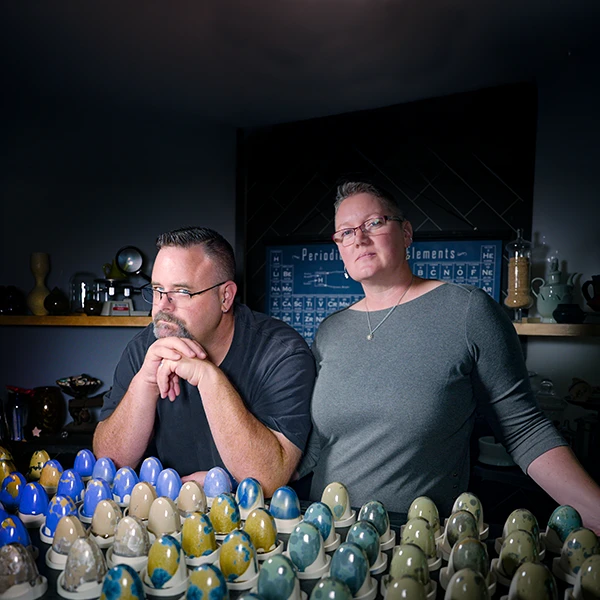
For Flux Sake ep. 96: Fluxed Up with Meredith Host is hosted by Matt and Rose Katz of the Ceramics Materials Workshop along with Kathy King of the Harvard Ceramics Program. Together they answer your burning questions about clay and glaze. In each episode they answer listener submitted questions in a comical, but also insightful way. This show will have you laughing and learning about glaze chemistry the chemistry behind ceramics in no time. New episodes typically drop every 2 weeks.
This Episode Meredith shares about working with decals and layered underglaze, as well as how she had to pivot away from her favorite glaze in the middle of a major commission.
Ready to dive deeper?
Loved learning about ceramic glazes? Want to go even deeper? Check out our Workshops & Courses, now available in Spanish, or YouTube Channel where Matt breaks it all down, myth-busting and Stull chart included!