Cobalt is one of the most recognizable colorants in ceramics. Ask a potter what cobalt does and the answer will usually be simple: cobalt makes blue. That’s a good place to start because cobalt really is remarkably reliable as a blue colorant. But if we stop there, we miss most of what cobalt can teach us about glaze chemistry.
Cobalt is particularly useful for understanding the difference between a raw ceramic material, an oxide supplied by that material, and the behavior of that oxide once it becomes part of a fired glass. We can watch a raw pink material become blue. We can compare cobalt carbonate with cobalt oxide and see that two very different-looking materials can ultimately supply the same cobalt to a glaze. We can change concentration and application thickness and see changes in intensity, then change the surrounding glaze chemistry and see changes in the character of the blue itself.
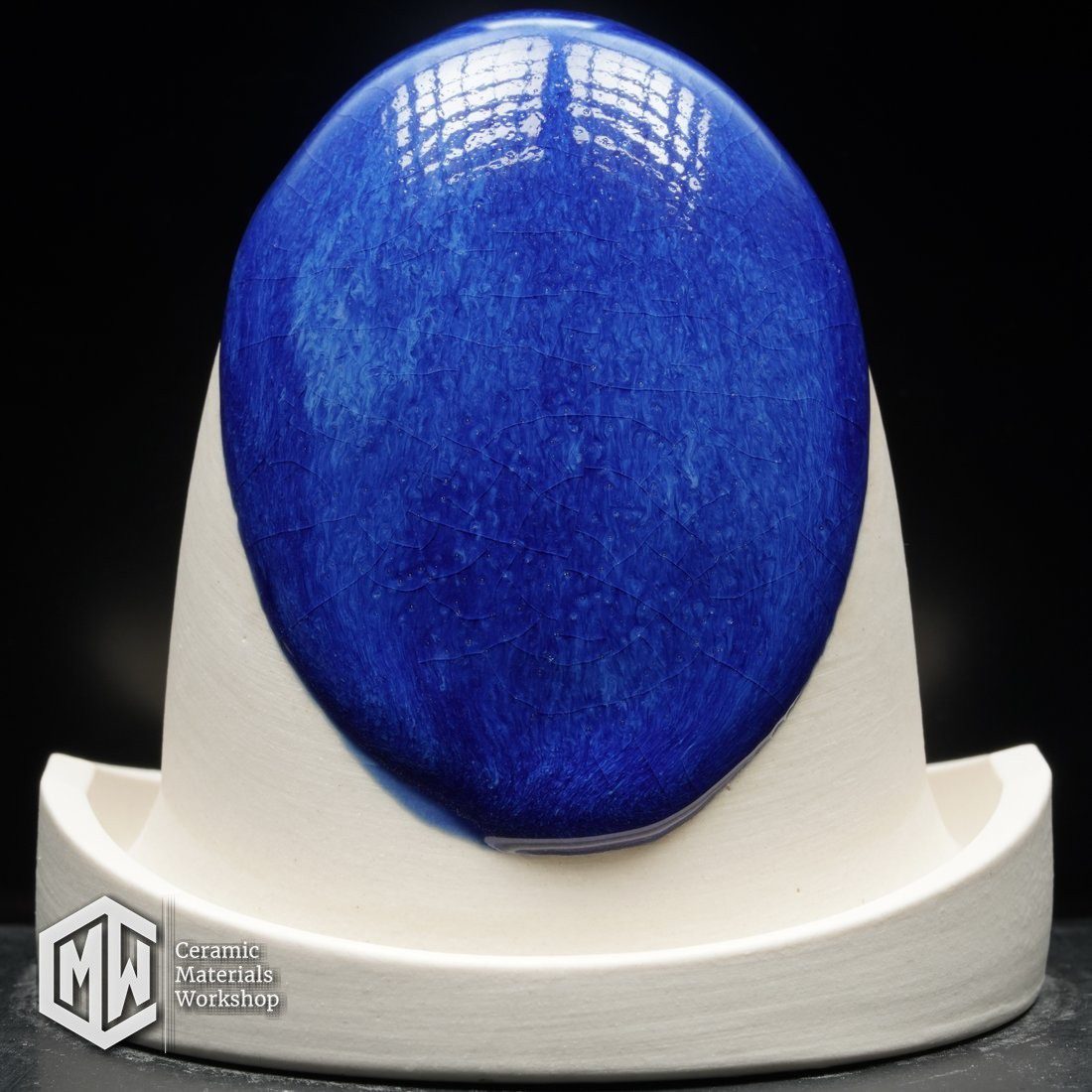
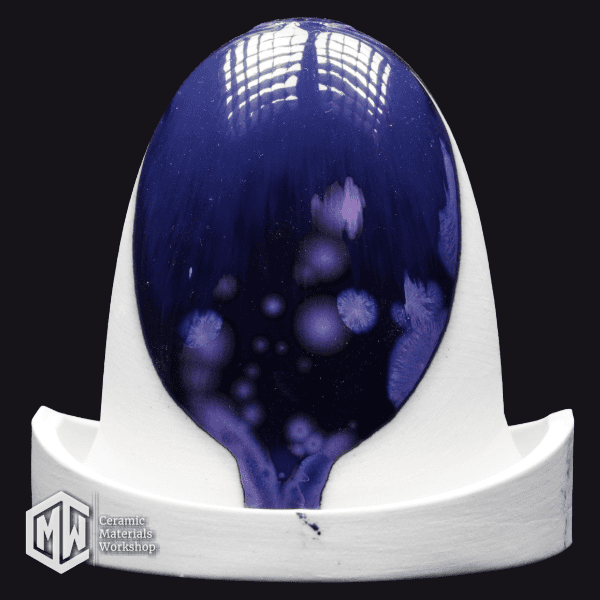
Under the right conditions, we can even watch cobalt move away from the blue we normally expect and become associated with lavender and purple crystalline areas. Cobalt therefore gives us a very good way to understand one of the central ideas of glaze chemistry: the colorant matters, but the whole glaze determines the fired result.
What Is Cobalt Doing in a Glaze?
In glaze chemistry, we’re interested in cobalt because of the color response it produces when it becomes part of the fired glass. Cobalt is an extremely effective ceramic colorant, and its characteristic response is blue.
This is different from thinking of cobalt as a blue pigment that we’re mixing into a clear substance. A ceramic glaze is being chemically transformed during firing. The cobalt becomes part of that fired system, and the color we see comes from the way that cobalt interacts with light within that environment.
That distinction explains why cobalt can remain recognizably cobalt while still producing different-looking blues in different glazes. The cobalt is giving us the basic color response, but we’re viewing that response through different glasses.
HHmmm I want to know EVERYTHING about glazes! READ CMW’S BLOG SERIES: Everything you need to know about glazes!
The First Rule: Cobalt Makes Blue
When learning ceramic colorants, it helps to establish predictable starting points. For cobalt, that starting point is blue. If cobalt is present in a fired glaze, blue should be our first expectation.
That doesn’t mean every cobalt glaze will be exactly the same blue. One might appear pale and delicate, another intensely saturated, another nearly black because it is so dark, and another may move toward a different character because of the chemistry surrounding the cobalt. Those differences don’t invalidate the basic rule. They show us that the cobalt is operating inside different glaze systems.
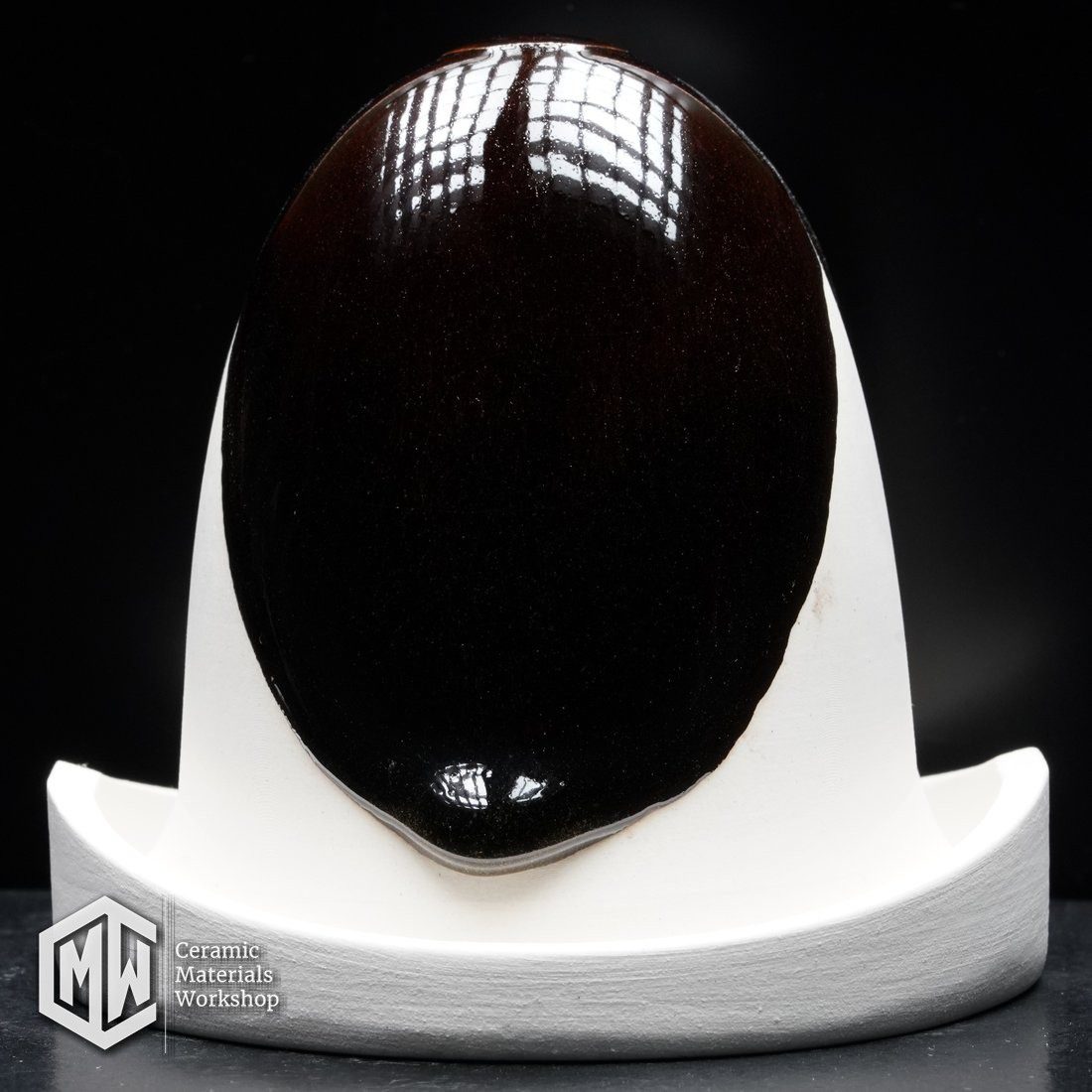
This gives us a useful way to diagnose color. Start with what we know about the colorant, then look at the glaze around it when the result begins moving away from that expectation.
The Raw Powder Is Not the Fired Color
One of the best demonstrations of this principle happens before the glaze ever enters the kiln. Cobalt carbonate doesn’t look blue in the bag. Its raw appearance can be pink to purplish, and an unfired glaze containing cobalt carbonate can look nothing like the blue glaze that eventually comes out of the kiln.
If we approached glaze like paint, this would seem strange. With paint, we expect the material we’re applying to resemble the final color. Ceramic glaze doesn’t work that way because what we’re applying is a collection of raw materials that will undergo chemical changes during firing and become a glass.
Cobalt interacts with light differently in that fired glass than it does in its raw material form. The raw pink appearance therefore isn’t a preview of the glaze color. It is simply the appearance of the material before firing.
This is a larger lesson about ceramic materials. Raw appearance is not a reliable predictor of fired appearance.
Cobalt Carbonate and Cobalt Oxide
The two common cobalt sources discussed in CMW are cobalt carbonate and cobalt oxide. They look different, behave somewhat differently during mixing, and contain different concentrations of cobalt, but we shouldn’t think of them as two completely different ceramic colors.
During firing, both ultimately supply the same basic cobalt oxide to the glaze. This means the useful distinction between them is primarily one of concentration and studio handling rather than the idea that one inherently makes one kind of blue and the other makes another.
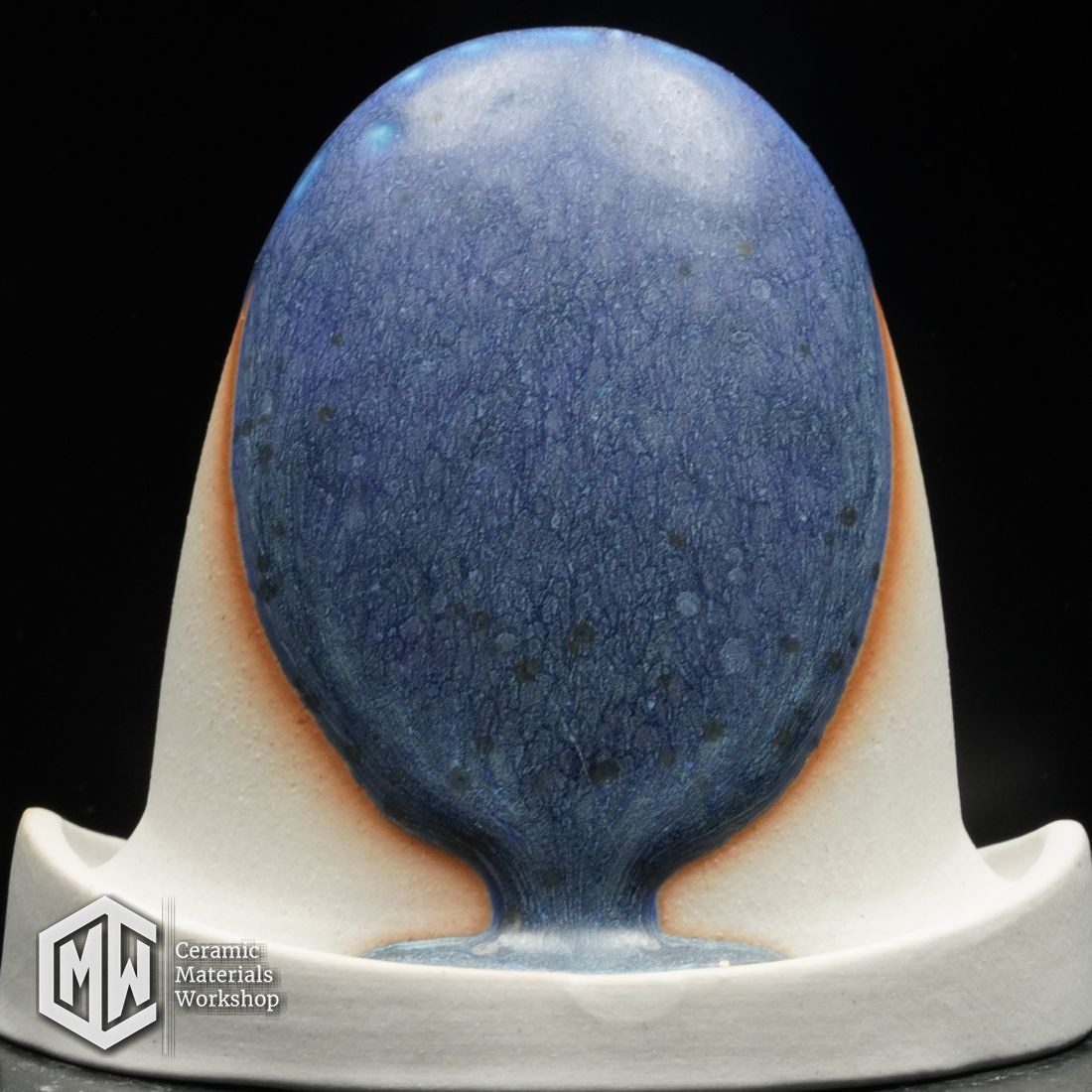
Cobalt oxide is the more concentrated cobalt source. Cobalt carbonate is less concentrated, which can make subtle control easier when working with such a powerful colorant. Cobalt oxide can also be more difficult to disperse evenly in water, making mixing an important practical consideration.
This distinction between material and chemistry is important. Cobalt carbonate and cobalt oxide are different materials in the studio, but our glaze chemistry thinking doesn’t stop with the material name. We want to know what those materials ultimately contribute to the fired glass.
Why Cobalt Is Such a Powerful Colorant
Cobalt has a strong color response. That is part of what makes it so useful, but it also means relatively small changes can become visually obvious.
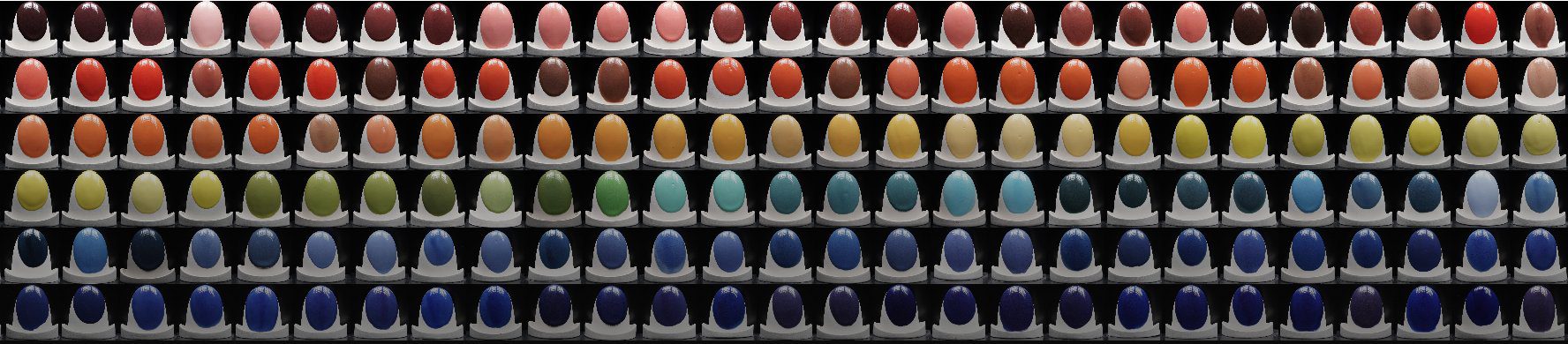
As cobalt concentration increases, the general effect is an increase in color intensity. A pale blue can become a stronger blue, then a very deep blue. Eventually, an intensely colored glaze can become so dark that our eyes have difficulty distinguishing the underlying color without sufficient light.
This is an important distinction because darker doesn’t automatically mean a different hue. Sometimes we’re simply looking at a more intense version of the same cobalt response.
The same problem appears when we’re evaluating very dark glazes containing multiple colorants. Our eyes may identify something as black even when the underlying glass is actually an extremely dark blue, green, brown, or combination of colors.
READ CMW’S BLOG: Crazing in Ceramic Glazes: What Tiny Cracks Tell You About Glaze Fit
Concentration and Thickness Are Not the Same Thing
A glaze can become darker because there is a stronger concentration of cobalt in the chemistry, but it can also become darker because there is simply more glaze on the pot. Those are two different causes that can produce a similar visual result.
Think about looking through colored glass. A thin piece allows more light through and may appear relatively pale. Increase the thickness of that same colored glass and it appears darker because the light travels through more colored material.
A cobalt glaze behaves the same way. A thicker application can produce a deeper-looking blue without changing the chemistry of the glaze at all.
This becomes important when evaluating test tiles. Before deciding that a color difference represents a chemistry problem, look at application thickness. Also consider kiln position, heatwork, and normal firing variation. If the result matters, repeat the test rather than building a chemical explanation around a single unexpected tile.
Cobalt Is Part of the Glaze Chemistry
It is tempting to talk about colorants as additions that sit outside the glaze chemistry. CMW does not treat them that way. Colorants are part of the fired chemical system.
That means cobalt isn’t simply floating around inside an otherwise unrelated glass. It is participating in the chemistry of the glaze, and the glaze surrounding it influences the visual result.
This is why we have to be careful with statements such as, “This material makes this blue.” A material may be associated with a particular effect, but the effect belongs to the entire glaze system.
The better question is: What chemical environment have we created for the cobalt?
READ CMW’S BLOG: Don’t Skip The Swatch! Why Glaze Testing is Your Ceramic SuperPower!
The Flux Environment Can Affect Cobalt
Cobalt gives us a dependable blue response, but the character of that blue can be influenced by the flux chemistry surrounding it. This is particularly useful when examining the alkaline-earth fluxes.
Changing the flux environment changes the glass. When the glass changes, the way we observe cobalt through that glass can change as well. This is why cobalt is useful in comparative glaze testing: it gives us a relatively stable colorant response against which we can see changes produced by the surrounding chemistry.
This also demonstrates why substituting one material for another cannot be understood simply by looking at material names. If the substitution changes the oxide chemistry of the glaze, it can change the environment in which cobalt is operating.
The cobalt didn’t suddenly become a different colorant. The glass around the cobalt changed.
Cooling Is Not After the Firing. Cooling Is Part of the Firing.
It is easy to think the firing is finished once the kiln shuts off, but glazes continue to develop as they cool. Cooling affects crystal growth, phase separation, opacity, surface texture, and some color responses. A glaze that looks unremarkable with a faster cooling cycle may develop more interest when the cooling is slower.
This is one reason fuel kiln results are often different from electric kiln results. A heavily insulated fuel kiln may cool more slowly than a smaller electric kiln, and that slower cooling can encourage effects that need time to develop. The key is not to confuse kiln type with cause. A result may not be “because it was gas.” It may be because the cooling curve changed.
That distinction is useful because it gives potters more control. If the effect is really about slow cooling, then the question becomes whether the electric kiln can be programmed to imitate part of that cooling behavior. If the effect is really about reduction, then the glaze chemistry and atmosphere need to support that. Either way, diagnosis improves when we name the variable correctly.
Cobalt and Other Colorants
Cobalt becomes even more interesting when another colorant enters the glaze. We shouldn’t imagine that each colorant occupies a separate visual layer where we can identify its contribution independently. Our eyes see the combined result produced by the fired glass.
Iron and cobalt provide a useful example. Cobalt contributes blue, while iron can contribute yellow, brown, and darker color responses. When those responses combine, the observed color can move toward green. Make that green sufficiently dark and the human eye may interpret it as black.
Under stronger illumination, a glaze that initially appears black can reveal an underlying dark green. Nothing about the glaze changed when the light changed. We simply became better able to see the underlying color.
This is an important concept when discussing black glazes. “Black” can describe what our eyes perceive without necessarily identifying a single chemical color response responsible for producing it.
Color Is Also About Light
This brings us to another important part of understanding cobalt: color is not just chemistry. It is chemistry interacting with light and our perception.
A very intense cobalt blue can appear almost black under one lighting condition and clearly blue under another. A thick area can appear darker than a thin area. A crystalline area can appear completely different from the surrounding glass even though the same cobalt is present.
When evaluating ceramic color, we’re therefore looking at several things simultaneously: the colorant, the chemistry surrounding it, the physical character of the glass or crystals, application thickness, and the light under which we’re viewing the fired surface.
This is one reason photographs can sometimes be misleading when diagnosing glaze color. The actual fired surface remains the better source of information.
Cobalt Can Reveal What Crystallization Is Doing
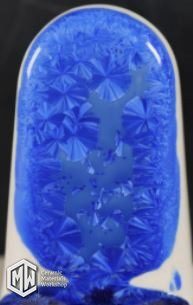
Crystallization gives us one of the most interesting examples of cobalt responding to its chemical environment. In the non-crystalline glass, cobalt gives us the blue response we expect. But when the glaze chemistry allows crystals to develop and cobalt becomes incorporated into those crystals, the observed color can move toward lavender and purple.
This is useful because the glaze can give us a visible comparison between two different chemical environments. One portion of the surface contains cobalt in the surrounding glass, while another shows cobalt associated with a crystalline structure.
We can see that difference because cobalt responds differently in those environments. The color change becomes evidence that something chemically different is happening in the crystalline area.
HHmmm I want to know EVERYTHING about kilns next! READ CMW’S BLOG SERIES: Everything you need to know about kilns!
Cobalt, Magnesium, and Lavender-Purple Crystals
Magnesium is particularly interesting in this crystalline environment. In the appropriate glaze chemistry, magnesium participates in the conditions that allow crystals to develop. As cobalt becomes incorporated into that crystalline structure, its interaction with light changes from what we see when it remains in the surrounding glass.
The result can be visually dramatic because a single glaze can contain blue glass alongside lavender or purple crystalline areas. We haven’t switched colorants halfway across the pot. We’re seeing the same cobalt expressed in two different chemical environments.
It is tempting to reduce this to a simple statement like “cobalt plus magnesium makes purple.” That leaves out the most important part of what is happening. Crystallization matters.
Magnesium isn’t functioning as a magic ingredient that simply changes cobalt from blue to purple. The whole glaze chemistry has created an environment capable of producing crystals, and cobalt behaves differently when it becomes incorporated into those crystals.
Cobalt as a Diagnostic Tool
Because cobalt’s basic blue response is so predictable, it can be useful when thinking diagnostically about a glaze. When the result isn’t what we expect, we can work outward from the cobalt instead of immediately blaming the colorant.
Look at whether the glaze is thicker, whether the firing varied, whether the piece occupied a different kiln position, whether the surrounding glaze chemistry changed, whether other colorants are present, and whether crystallization is occurring. Mislabeling also needs to remain a possibility when a test is significantly different from what the chemistry predicts.
Those questions are generally more productive than saying that the cobalt “did something weird.” Cobalt is usually doing something understandable. The challenge is identifying the chemical and physical environment in which we’re seeing it.
Cobalt Shows Us Why Material Names Are Not Enough
Cobalt carbonate and cobalt oxide make this particularly clear. If we only thought in material names, we might expect two different materials to produce fundamentally different effects. Once we move into glaze chemistry, we understand that both materials are supplying cobalt to the fired glaze.
The same reasoning applies to the rest of the glaze. We don’t want to say that a particular feldspar, frit, clay, or flux material is independently responsible for the final cobalt color. Each material is contributing chemistry to a larger system.
What matters is the composition of the glass that all of those materials create together. Recipes tell us which materials were weighed. Chemistry helps us understand what those materials become.
What Cobalt Can Teach Us About Glaze Chemistry
Cobalt starts with one of the easiest rules in ceramic color: cobalt makes blue. From that simple observation, however, we can learn an enormous amount about how glazes work.
The raw powder doesn’t predict the fired color. Different raw materials can supply the same cobalt to the glaze. Concentration changes color intensity. Application thickness can create an apparent intensity change without changing the chemistry. The surrounding flux chemistry influences the character of the color. Other colorants can combine with cobalt to create much darker and more complex results. Crystallization can place cobalt into a different chemical environment and produce lavender or purple crystalline areas alongside blue glass.
All of those observations lead us back to the same CMW principle: we cannot explain a glaze by pointing to one material.
Cobalt gives us the blue response, but the fired color we actually see belongs to the entire glaze. Once you understand that, cobalt stops being simply “the thing that makes blue.” It becomes a tool for understanding glass, color, crystallization, and glaze chemistry as a whole.
Interested in more CMW content? Watch CMW’s SHORTS on YouTube
Everything you wanted to know about clay and glazes *But didn’t know who to ask
Ceramic Materials Workshop’s YouTube is a place online to learn how ceramic materials work (and why they don’t work). We will explore the secrets of clay and glazes, temperature and atmosphere, materials and methods. All the things that we love (and loathe) about ceramics.
Ready to dive deeper?
Loved learning about ceramic glazes? Want to go even deeper? Check out our Workshops & Courses, now available in Spanish, or YouTube Channel where Matt breaks it all down, myth-busting and Stull chart included!