If you spend enough time around ceramics, you’ll eventually notice that kaolin seems to show up everywhere.
It’s in porcelain bodies.
It’s in stoneware bodies.
It’s in glaze recipes.
It’s in slips, engobes, and casting bodies.
In fact, it would be difficult to find a ceramic studio that doesn’t have at least one kaolin sitting on a shelf somewhere.
Despite that, most potters spend surprisingly little time thinking about what kaolin actually does.
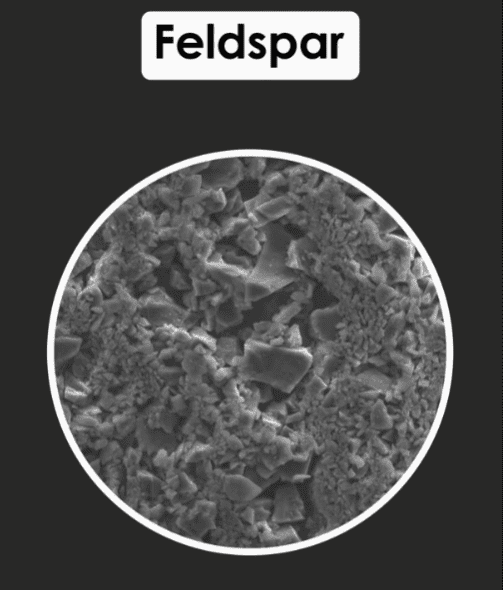
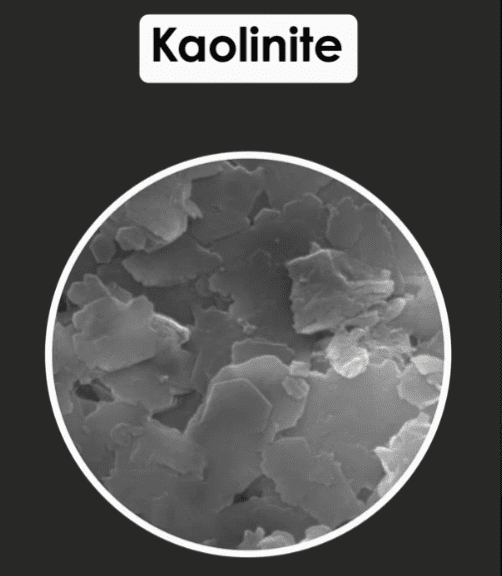
Part of the reason is that kaolin isn’t a particularly exciting material. Feldspars melt. Colorants create dramatic visual effects. Frits allow us to build low-temperature glazes. Kaolin, by comparison, tends to sit quietly in the background. Yet Kaolin is one of the most important materials in ceramics because it influences both how our materials behave before firing and how they perform afterward.
Understanding kaolin requires us to move beyond the idea that materials have a single purpose. Like most ceramic materials, kaolin performs several jobs simultaneously, and those jobs change depending on whether we’re discussing a clay body or a glaze.
HHmmm I want to know more about other glazes in ceramics! READ CMW’S BLOG SERIES:Everything you need to know about glazes!
What is Kaolin?
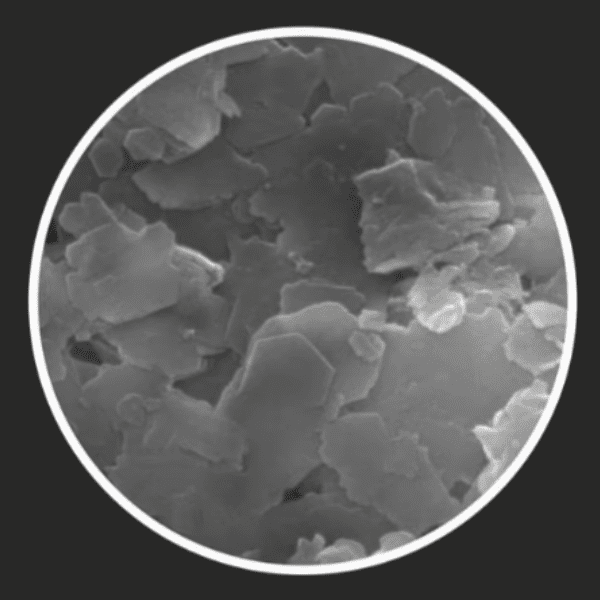
Kaolin is a naturally occurring clay mineral formed through the weathering of feldspathic rocks. Over long periods of geological time, feldspars break down and reorganize into new minerals, one of the most important being kaolinite.
For ceramic artists, the geological history is interesting, but the practical reality is that kaolin is one of our primary sources of alumina and silica. Unlike feldspars, kaolins contribute very little melting power. Instead, they provide structure.
This is one of the reasons kaolin appears so frequently in glaze chemistry. Glazes need silica to build glass and alumina to control the behavior of that glass. Kaolin conveniently provides both. When a glaze recipe includes kaolin, we are not adding it because there is something magical about the material itself. We are adding it because of the chemistry it contributes to the system.
That distinction is important because ceramic chemistry is ultimately concerned with oxides, not material names. Kaolin is simply one way of delivering those oxides.
Kaolin in Glazes
Most potters first encounter kaolin in glaze recipes, where it is often described as a source of alumina.
While that is true, it is only part of the story.
Alumina plays a major role in controlling the behavior of a glaze. As alumina increases, glazes generally become more viscous and more resistant to movement. As alumina decreases, glazes tend to become more fluid. Because of this relationship, alumina is one of the key variables that influences how a glaze melts and how it behaves in the kiln.

Kaolin is one of the most common ways we introduce alumina into a glaze because it does so efficiently while also contributing silica. This dual contribution makes it an extremely useful material when building glaze chemistry.
But kaolin’s influence begins long before the kiln is turned on.
Unlike silica or feldspar, kaolin is a clay. Its fine particle size helps keep glaze materials suspended in water. This improves mixing, application, and storage. Many glaze recipes rely on kaolin not only for its chemistry but also for its physical behavior in the bucket.
This is one of the reasons glaze formulation is often more complicated than it first appears. We are not only trying to achieve a particular fired chemistry. We are also trying to create a material that can be mixed, stored, applied, and handled successfully in the studio
Not All Kaolins Are Identical
One of the most common assumptions in ceramics is that all kaolins are interchangeable.
Like most assumptions involving raw materials, reality is more complicated.
EPK, Grolleg, Tile 6, and Helmer are all kaolins, but they come from different deposits and have different geological histories. As a result, they contain different impurity levels, particle sizes, and physical characteristics.
Sometimes those differences are insignificant. Sometimes they become extremely important.
A porcelain body designed around a very white kaolin may produce noticeably different results if a darker kaolin is substituted. A casting body may respond differently because of changes in particle size distribution. A glaze may suspend differently because one kaolin is finer than another.
This does not mean substitutions are impossible. It simply means that material substitutions should be approached thoughtfully rather than assuming that every material within a category behaves exactly the same way.
Kaolin and Clay Bodies
While potters often encounter kaolin in glazes, its role in clay bodies is arguably even more significant.
In a clay body, kaolin contributes both chemistry and working properties. It influences plasticity, drying behavior, fired color, shrinkage, and vitrification. These are not small considerations. They are fundamental characteristics that determine how a clay body performs throughout its entire life cycle.
This is one reason clay body design can be more challenging than glaze design. A glaze only needs to perform after firing. A clay body must perform at every stage of the process. It must throw well, dry well, fire well, and survive long-term use.
Kaolin participates in every one of those stages.
The specific type of kaolin chosen can therefore have consequences that extend far beyond chemistry alone.
The Importance of Impurities
When ceramic artists talk about kaolin, they often focus on the alumina and silica content. However, the impurities within a kaolin can sometimes be just as important.
Iron and titanium are particularly influential. Even relatively small amounts can affect fired color, translucency, and the brightness of stains and glazes. This is why porcelain manufacturers often pay close attention to kaolin selection. The difference between a bright white porcelain and a cream-colored porcelain may be measured in fractions of a percent of impurity oxides.
For some applications, those differences are critical.
For others, they may not matter at all.
As with most ceramic questions, the answer depends on what the material is expected to do.
Thinking Beyond Material Names
Perhaps the most useful lesson kaolin teaches is that ceramic materials cannot be understood solely by their names.
Potters often ask whether one kaolin can be substituted for another. The question itself is understandable, but it starts in the wrong place.
The more useful question is: what role is the material playing in the recipe?
Is it primarily contributing alumina? Is it affecting color? Is it influencing suspension? Is it being relied upon for plasticity?
Only after we understand the function can we determine whether a substitution is likely to work.
This shift—from thinking about materials to thinking about what materials do—is one of the most important transitions in learning ceramic chemistry.
READ CMW’S BLOG: Don’t Skip The Swatch! Why Glaze Testing is Your Ceramic SuperPower!
In Conclusion
Kaolin is one of the foundational materials of ceramics, yet it often receives far less attention than more dramatic ingredients. Kaolin quietly contributes alumina and silica to glazes, helps keep suspensions stable, influences the working properties of clay bodies, and plays a significant role in fired color and vitrification.
Its importance comes not from any single property but from the fact that it participates in so many parts of the ceramic process simultaneously.
The next time you see kaolin listed in a recipe, it is worth remembering that it is doing much more than simply filling space on an ingredient list. Like most ceramic materials, it is contributing chemistry, physical behavior, and performance all at the same time.
And understanding those contributions is often the first step toward understanding the ceramic system as a whole.
Interested in more CMW content? Watch CMW’s SHORTS on YouTube
Everything you wanted to know about clay and glazes *But didn’t know who to ask
Ceramic Materials Workshop’s YouTube is a place online to learn how ceramic materials work (and why they don’t work). We will explore the secrets of clay and glazes, temperature and atmosphere, materials and methods. All the things that we love (and loathe) about ceramics.
Ready to dive deeper?
Loved learning about ceramic glazes? Want to go even deeper? Check out our Workshops & Courses, now available in Spanish, or YouTube Channel where Matt breaks it all down, myth-busting and Stull chart included!