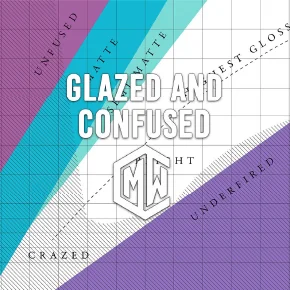
Happy Anniversary to the Stull map, published 112 years ago! This classic tool, created by R.T. Stull in 1912, is still a staple for many ceramists today. But what is it and why is it so important? Let’s dive in!
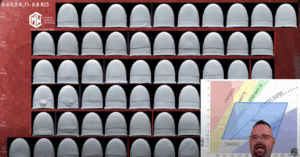
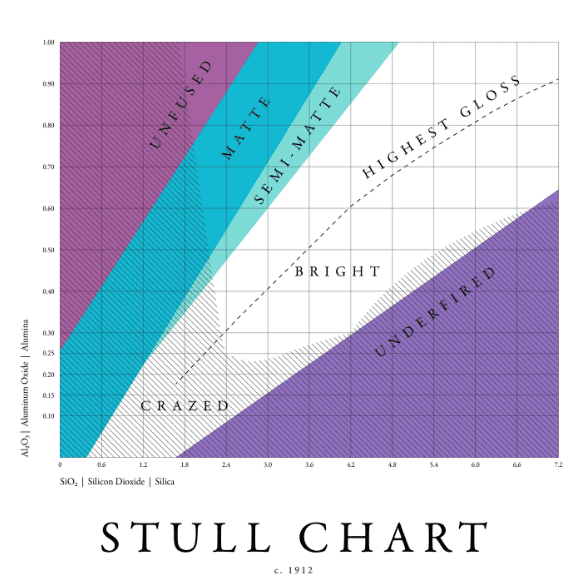
The Stull map is a graphical representation of glaze chemistry, primarily used by ceramists to understand and predict the fired properties of glazes, such as whether they will be glossy, matte, or even crazed.
The Origins of the Stull Map
Ray Thomas Stull (1875-1944) was a professor of ceramic engineering at the University of Illinois. In 1912, he created the map as part of his research on the “Influences of Variable Silica and Alumina on Porcelain Glazes of Constant RO,” which was published in the Transactions of the American Ceramic Society.
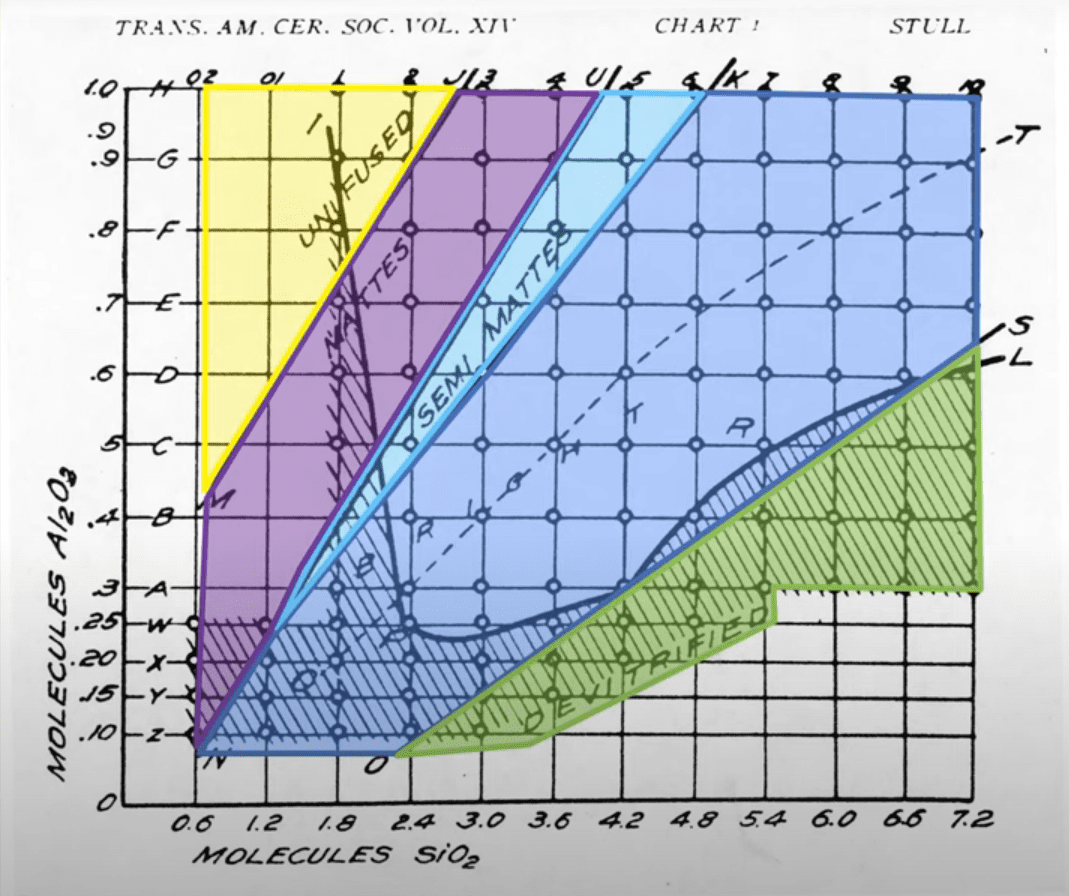
Stull’s motivation for creating the map was to systematically study the relationship between a glaze’s chemical makeup and its physical properties after firing.
At the time, glaze formulation was often a process of trial and error. By keeping the fluxes (the RO and R2O groups in the formula) constant, he could isolate the effects of silica (SiO2) and alumina (Al2O3), the two primary glass-forming and stiffening agents in a glaze. His goal was to provide a clearer, more predictable way for ceramicists to understand how changes in these key oxides would affect the final product, moving the field of ceramics from pure guesswork to a more scientific practice.
To create the map, he used the Unity Molecular Formula (UMF), a method for expressing a glaze recipe by the proportions of molecules rather than the weight of materials. He kept the fluxes constant, with their sum always adding up to 1. By doing this, he could systematically test how varying the amounts of silica (SiO2) on the x-axis and alumina (Al2O3) on the y-axis affected the fired glaze at cone 11.
Why It’s Used in Ceramics
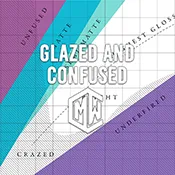
The Stull map is a powerful tool for predicting the outcome of a fired glaze. The different regions on the chart are mapped out to show where glazes are likely to be:
- Glossy 🤩
- Matte 🌫️
- Semi-matte
- Underfired
- Crazed
By plotting a glaze’s silica and alumina values on the map, a ceramicist can get a good idea of its likely properties. This can help in diagnosing glaze problems and intentionally formulating new glazes.
Why It’s Still Important
Despite its age, the Stull map remains a valuable teaching tool. It helps potters visualize and understand the complex relationships between the different oxides in a glaze. It’s much easier to grasp the concepts of glaze chemistry by seeing a physical “map” rather than just a bunch of numbers.

This is why many modern digital glaze calculators and online resources, like Ceramic Material Workshop, still include a Stull chart as a primary feature. It gives a quick and intuitive sense of a glaze’s potential.
Cool Facts and Modern Adaptations
- Stull’s original research was conducted at cone 11, Ceramic Materials Workshop has recreated the map for different temperatures, such as cone 6, to make it more relevant to contemporary firing practices. See our classes for more indepth analysis on Stull at different temperatures.
- The map is a great starting point, but it isn’t the final word on glaze behavior. Its predictions can be less accurate when a glaze contains certain oxides, like titanium, which can cause crystallization and change the surface appearance.
- Some researchers have even overlaid ternary phase diagrams onto the Stull map to provide a deeper understanding of what is happening chemically in a glaze, revealing “micro-regions” where specific effects, like phase separation, occur.
- The Stull map provides a clear visual of the silica-to-alumina ratio. Glazes with a lower ratio are generally matte, while a higher ratio leads to a glossy finish. This fundamental principle is at the heart of much glaze formulation.
Want to see how it’s used? Free Lesson – on us!
Tired of glazes crazing? Learn to decode Stull’s glaze map and formulate perfect glazes with this FREE video clip from our comprehensive online workshop, The Middle Glazes: The Story of Mid-Temperature Glazes! In this clip, Matt breaks down the science behind Stull’s map, empowering you to:
- Diagnose glaze problems like crazing
- Predict glaze behavior before firing
- Formulate glazes with confidence
Ready to dive deeper?
Loved learning about ceramic glazes? Want to go even deeper? Check out our Workshops & Courses, now available in Spanish, or YouTube Channel where Matt breaks it all down, myth-busting and Stull chart included!